Thursday, February 16, 2012


Gear Review: Tech4o Discover GPS


 Fitness watches today could accurately be referred to as wrist-top computers. The secret agent watches of yesterday with steel-cutting lasers and micro-fine cable rappel lines seem pale in comparison. Manufactures push the limits cramming the latest functionality and technology into the smallest package. These “watches” provide the user with data such as time, distance, pace, direction, and caloric expenditure. Fitness watches use an accelerometer or GPS communication to track pace and distance. GPS watches require no tuning or adjustment relative to accelerometer watches and prove to be more accurate over rugged terrain.

Enter the Discover GPS watch by Tech4o. The Discover GPS comes onto the market packed with features and priced well under comparable units. I initially judge these watches by size, battery life, and the technology used. The Discover GPS is lighter than other models tested and I found its size and shape to be superior. The watch features a rechargeable lithium battery which lasted several days on a single charge during normal use. The battery is more than ample to power all features even on the longest runs. A power saver mode can be enabled to get the most from the battery while on longer expeditions such as extended hikes, cycling, and alike. The people from Tech4o have somehow hidden the GPS receiver in the Discover GPS to produce a watch that is no larger than the standard G-Shock, while providing solid GPS reception.

The Discover GPS provides the user with a full complement of data points and display modes.  Best of all, the Discover GPS allows the user to customize the layout of the display modes. If you would like elevation, time, and pace on one screen, just set it in your profile. View settings can be set from both the watch and from the included PC interface. This makes for a great user experience and sets the Discover GPS apart from other units. The PC interface and included software allow you upload and download workout statistics, routes, and tracks. Elevation, time, and pace, is graphed for you and data can be viewed in Google Earth. Tech4o seals the deal by throwing in a wireless heart-rate monitor chest strap.

The Discover GPS is feature rich, light, and easy to use. This model will serve a number of sports and with no other accessories needed to purchase. The Discover GPS package and price point makes this a great value.


Price: $199.99

Gear Review: Klymit Kinetic Double Diamond Vest
Klymit has developed an inflatable and adjustable vest aimed and maximizing performance and compactness. The design takes advantage of stretch fabric, argon gas, and a built-in regulator dial.
The more than modern appearance of this vest had me thinking “gimmick” and I was skeptical from the get go. Upon first inspection, I was impressed with the construction and materials used in the vest. Details such as stitching, hems, and zippers, all seem well done. The cut of the garment seemed athletic and it fit me well with various levels of inflation. The vest however doesn’t move well with the body when its inflated to what I’m judging to be more than 50%. The Klymit Kinetic’s chambers are sewn linearly making it stiff from bottom to top. When getting into my truck with the vest zipped, it rose above my shoulders like a flotation vest in the water. Being somewhat uncomfortable, I wondered if the vest would ride up the same way on a ski chair lift or other similar posture. That being said, I did find the vest comfortable while walking and even jogging.

The vest collar is not insulated, but the cut and fit of the collar, arms, a waist seemed ideal for heat retention. Drawstrings compliment both the collar and waist for adjustable fit. The vest design hugs the body, and I was very impressed with the warmth. The vest performed well for me while being in a low aerobic zone near freezing temperatures wearing a long sleeve base layer.

Inflation, and hence heat retention, is adjusted by the use of a regulator dial on the left side of the chest.  Truthfully, I learned that unzipping and zipping to regulate body temp is almost instinctive to me at this point, and I found I did not take advantage of vests regulator dial as often as I would like. However, since the vests chambers must be air tight, the relative breathability found on other traditional down and synthetic vests is in question with this item. I do not feel that this vest will breath well enough during more increased aerobic activities.

The vests inflation hose is retained in its own zipped area within the left hand pocket, keeping it out the way until inflation time. I found the vest easy to inflate and deflate with the included “Klymitizer” and tanks. I found no clear indication on the vest or in the enclosed documentation as to what maximum inflation looks like. Left mostly untouched, the vest lost the majority of its loft and required another fill in 3-4 days. It’s unclear at this time if this is due to a leak or just normal loss of gas.

In the end, I can’t see myself taking advantage of the adjustability that Klymit has built into this vest. Deflating the vest and recharging later on the mountain just doesn’t appeal to me. The Klymit vest when combined with one tank and charger, seems to diminish most if any weight and or storage savings. Keep at it team Klymit! In the meantime, I’ll continue with the traditional layering and venting techniques.

Monday, January 23, 2012

Trip Report: Colorado Hut Trip, December 2011


My first Colorado hut trip was just last month. Pathetic, as I've lived in this great state for the better part of two decades. I assumed what most others have; that hut reservations have to be made a year in advance and are otherwise difficult. My trip was conceived and planned last minute and I was able to book a very nice “hut” just two days before my visit.

Hut descriptions and current vacancy can be viewed online with an actual phone call needed to make payment. It was easy to get through to the staff at the 10th Mountain Division office and they were very friendly and helpful.  The office emailed my confirmation and itinerary within moments of payment.

These so-called huts are really a mix of back country cabin, log home, and ski lodge. Most include furnished kitchens, wood burning and propane stoves, solar powered lighting, and a wide open floor plan. Other privately owned huts rented through the 10th Mountain Division, feature backcountry luxury amenities such as saunas and hot showers. The method by which you access a hut varies by season. Most will ski, hike, or snowshoe. Snowmobiles and ATVs are allowed on some routes but I think it’s fair to assume that most of us are looking for a motor-free retreat.

This being my first hut approach and not familiar with any of the trails, I picked an easy to moderate hut trip. There’s one hut in the 10th Mountain system appropriately named “The 10th Mountain Division Hut”. It sits about 6 miles due west of Ski Cooper. There are two access routes from the east, varying from 4 miles to 6 miles. Elevation gain from either is around 1,000 feet.  This hut like most others has additional access routes from other huts in the system.

I chose the Crane Park trail-head as our starting point. This route is comprised mostly of rolling single track through a mix of dense pine. The trail opens in the last mile with a steady uphill grade and great panoramic views. From trailhead parking to the 10th Mountain Hut was just less than four and a half miles. The trail was broke for us already thanks to skiers pulling sleds the previous day. We made it to the hut in less than four hours, taking a few short stops to check navigation. From this route, the hut is not visible until you’re within 100 meters. The trails into the 10th Mountain Huts are marked with blue diamonds, but with other huts in the area, use caution at trail intersections, checking your direction.

This hut, like so many others, has a main level that features 180 degrees of large windows to enjoy the surrounding meadows and mountain ranges. There is more than enough space and seating for relaxing, eating, etc. The kitchen was large enough for several to use at once and all the cooking essentials such as plates, pots, and utensils, are provided. Water is available at the cabin via a tank fed by the huts roof run-off.  Melting snow on one of the stoves is the most common for drinking water. I would recommend filtering either source.

Two large wood burning stoves provided more than enough warmth during our December stay and an ample wood supply is provided for you. This hut also featured a cold storage closet for keeping perishables overnight. This hut has all of the sleeping capacity on the second level so there is no issue with a late night card game interfering with other guest’s sleep.

  The 10th Mountain Division Hut is suited for many skill levels, is family friendly, and is in great condition. Trails, lakes, and peaks in the immediate area, offer a great variety of activities. Be sure to check Huts.org for a recommended trip checklist. Go prepared and have fun!

Friday, January 20, 2012

Gear Review: Inov-8 Flyroc 310


Most of us at one point shopped for athletic footwear purely based on how they looked in the store. What looked cool. As we learned more about our feet and our activity, we looked for a shoe or a boot that matched properly. Looks are what first attracted me to the Inov-8 ‘Flyroc 310’ a couple of years ago. The shoe screamed adventure with an aggressive sole and its unique webbing and lacing system. Inov-8’s line of shoes looks like nothing else on the market. A sharp contrast from the typical beefy trail shoe, the Inov-8 line promotes natural foot movement with a minimal yet advanced sole design. It’s this design that actually kept me from purchasing the shoe until now. I knew that I needed to build my foot and leg strength before running in such a shoe. I was accustomed to stomping around in something much more substantial.
The Inov-8 product line rests on top of 8 different outsoles, each with its own intended activity and terrain condition. The Flyroc model and its sole sits about in the middle of extremes between hard compact dirt and mud and snow. Its intended crowd is trail runners and adventure racers. Note, Inov-8 designates other models specifically for “mountain running”.
The Flyroc felt great right out of the box. The shoe’s upper is comprised completely of webbing reinforced with lacing support around the foot. The fit is snug and very comfortable. Once on the trail, I noticed something I didn’t in the store, the shoe’s sole has a bubble-like knuckle that sits just behind the ball of the foot, between the big and middle toe (head of the metatarsal I’m told). I found this to add significant comfort while ascending and descending on hard pack and rocky terrain. This feature also promoted the spreading of the toes and gave me a barefoot like experience. After 15 minutes on the trail, it was if I didn’t have shoes on at all…like I had rubber claws glued directly to my feet. The combination of the flexible sole and outer lugs provided great traction on loose dirt/scree, rock and snow. The ankle channel of this shoe is cut very low so I wouldn’t recommend a low-cut (“no-show”) sock. I found that I picked up more than my fair share of pebbles. Surprisingly, I had no issues with wet feet while running in a light mix of snow and slush. The Flyroc is also available in Gore-Tex.
With its semi sticky rubber sole, well-made upper webbing, and good toe protection, the Flyroc makes for a lightweight all-around adventure shoe. The shoe is light, well made, well-engineered, and priced at or below other trail shoes.
Weight: 1lb 4 oz (mens size 9)
MSRP: $90

Thursday, January 19, 2012


Gear Review: Source Crosser Sandal:


When I learned that I’d be testing sandals designed and manufactured in Israel, my immediate thought was “can I be objective?”. As a gear junkie and former leatherneck, I’ve learned to appreciate everything from boots to machine guns coming out of Israel. Simple yet intelligent designs that are overbuilt to take whatever you throw at it.

The Source ‘Crosser’ sandal from Vagabond Systems did not disappoint. In hand, I immediately noticed that the soles were much more substantial than other sport sandals. The high quality rubber had me jonesing to try these out on some rock slab. The Crosser is designed for river crossing but the outer sole has traction cross sections at the ball and heel of the foot to support other activities. The sandals were very comfortable on sand, rock, and out on the town. Source’s ‘Onestrap’ system uses a single piece of strap that moves freely through the foot-bed and adjusts using one piece of hardware. Genius.

The fit was true to size and the feel is sturdy and stable, leaving the underfoot protected. Stability is enhanced using Source’s ‘A.R.T. (Advanced Rubber Technology) Grip’ rubber footbed with hundreds of micro points that holds the foot even wet. While the sandal’s strapping will not support ascending and descending rugged trail for most (not what it was designed for), it provided all the protection and comfort of a high-end hiking boot sole, the relief of a sandal, and the utility of a water shoe. Very well done.


MSRP: $90
Weight: 615 grams

Gear Review: Siskiyou Convertible Pant


I've spent the last four plus years moving toward a ultralight hiker, and with that, I expect more out of my gear. Case in point, the Siskiyou convertible hiking pants from GoLite. This is an ultralight pant weighing in at 9 ounces, but featuring front and rear pockets and one side cargo pocket. The pants have ankle zips for ease of removal and zip off converting to 11” shorts. For this pant and other clothing, GoLite has morphed 100% Nylon content into a proprietary material they call ‘Suplex’. The result for me was a Nylon that felt more like ultra-thin cotton, breathed extremely well, and is water resistant.

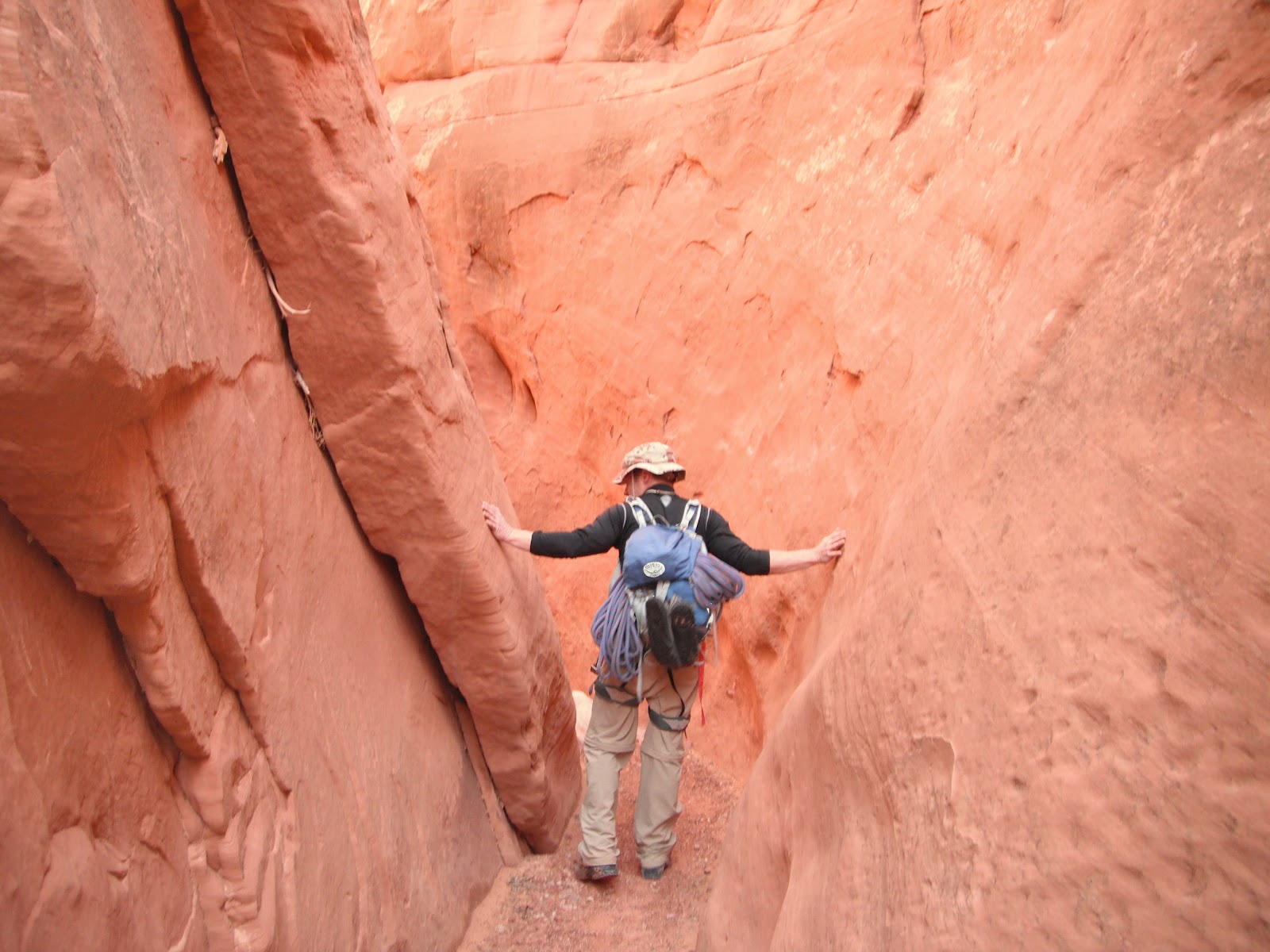
I purchased the pants just before my Utah trip last week and they got quite the workout. What I didn’t have planned for the pants was a rough half day of rappelling, climbing, and sliding down a mix of rock canyons. At the days end, I was nothing short of amazed how well these pants held up. The smooth fabric and lack of exposed stitching around pockets kept the pants from snagging. The articulated knees worked very well when climbing. These pants are very packable, look almost good enough for the office, and are well suited for all-day adventure/travel.


MSRP $90
(paid $50 at GoLite sale)

Size: Small to XL


Gear Review: Mountain Hardwear ‘Pinole 20’ Sleeping Bag

Mountain Hardwear’s ‘Pinole 20’ sleeping bag is a price point bag aimed at those that just don’t want to spend more than $100 on a bag. This is a comfort mummy cut bag that’s efficient yet roomy enough for twitchy sleepers like myself. The bag weighs in at just over a very reasonable three pounds and features MH’s synthetic ‘Themic MX’ insulation. For me, the bag seemed very comfortable approaching freezing temps while wearing a light baselayer. MH has the bag’s EN comfort rating posted at 35 degrees and it packed down to about 8” when using a compression sack. The bag packs value with a face gasket, tailored hood, and fleece lined stuff sack that doubles as a pillow. The bag uses a well sized zipper but I found that the bag’s shell and lining repeatedly interfered with zipping. Note, the best insulation isn’t much good without a great running zipper so test the zipping passionately in the store before you buy any bag. While it’s aimed at lighter duty, the bag is a good fit for the occasional overnighter in moderate temperatures.


MSRP: $90
Size: Regular and Long
Weight: 3 lbs. 3 oz.